
We Sold Out in 15 Minutes: How Two Fourth Graders Built The Drip Bros
The youth sports business success story started with a simple style problem
Team gear is supposed to make players feel connected. But a lot of it can look the same, cost more than expected, or earn the dreaded “dad-approved” reaction. For two fourth graders, that gap between team pride and actual style was not a business-school case study. It was just something they noticed while being kids who played sports.
Why team gear felt boring, expensive, or totally “dad-approved”
Most players want something that feels like them, not just another uniform item. They want color, personality, and a little swagger for the walk into practice. Parents, meanwhile, want an item that is reasonable, wearable, and not destined to disappear under a car seat. That mismatch created room for a small accessory with a big personality.
The broader youth sports economy is large, but a youth sports market is not the same thing as a good idea. A useful idea starts closer to home, with a real annoyance and people who understand it. Here, the annoyance was simple: team spirit could be way more fun.
How two fourth graders spotted an opportunity between practices
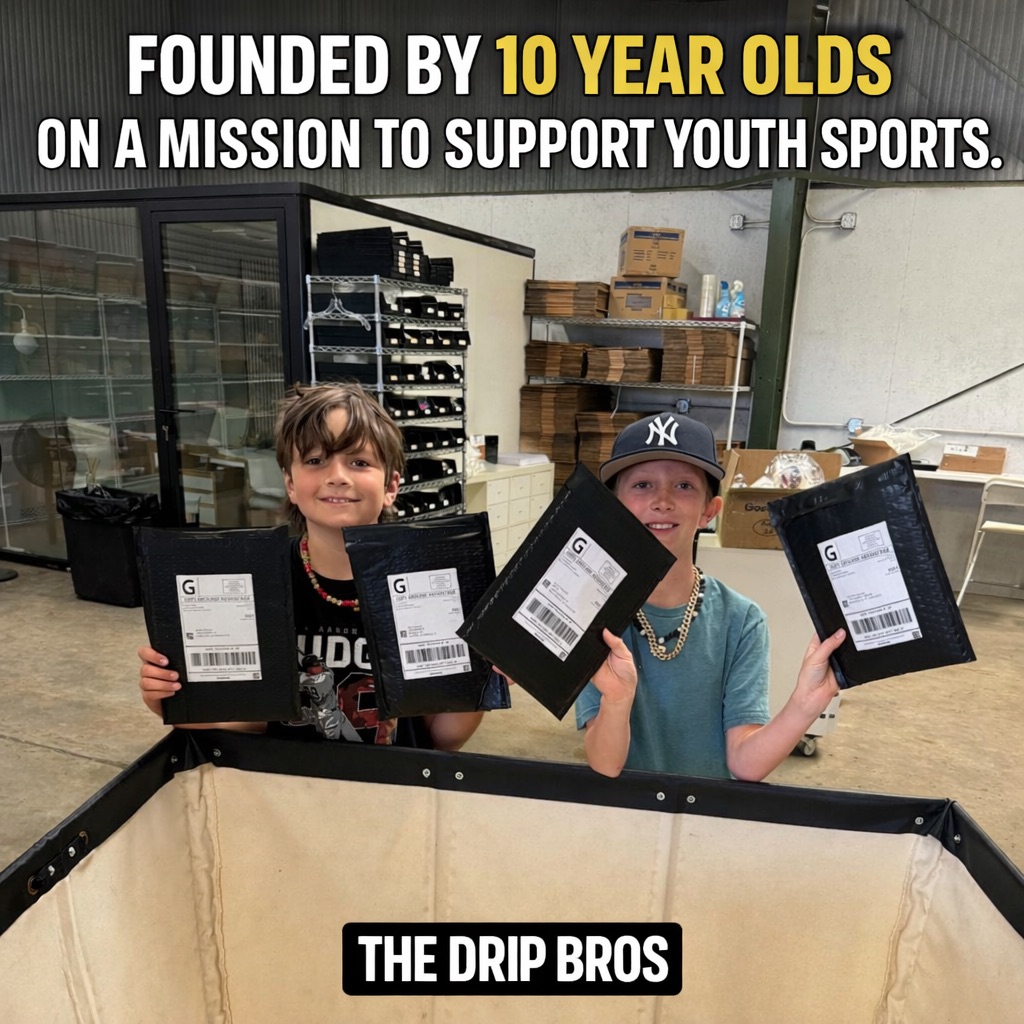
Jackson H and Jackson J were best friends, athletes, and fourth graders when they started thinking about the problem. Their idea grew from conversations around school and sports rather than a formal pitch deck. That is a pretty good reminder that young founders often see details adults walk past because they are still living inside the experience.
They were not trying to fix every part of youth sports. They were looking for one small way to help players and fans show what team they belonged to. That narrow starting point made the idea easier to explain, test, and improve.
Turning a funny idea into The Drip Bros brand
The name had to sound like something a teammate would actually say. It needed energy, humor, and enough confidence to work on a game day without becoming a full-volume embarrassment. The result was The Drip Bros, a brand born as a fourth-grade school project and shaped around sports-themed necklaces for athletes, teams, and fans.
The story worked because it was real. Two friends were making something for a community they knew, while keeping the tone light enough for kids and clear enough for parents. That combination gave the brand a personality before it had a huge product line.
From playground brainstorm to a product athletes actually wanted
A fun concept still has to survive contact with real people. The boys had to decide which colors and styles felt exciting, then hear what teammates thought when the jokes wore off. The work was part creativity, part testing, and part learning when to stop arguing about a design.
Choosing designs that felt bold without being cringe
The best designs had to stand out without looking like a costume. Strong team colors, playful details, and a clean shape helped the necklaces feel sporty instead of random. The goal was not to make every player dress the same; it was to give each player another way to represent the group.
That is where kid judgment mattered. Adults can approve a product, but kids know immediately whether their friends would actually wear it. A design that passes both tests has a much better chance of leaving the house.
Testing the first ideas with teammates, parents, and coaches
Early feedback probably came in quick bursts: “That one is cool,” “I would wear this,” or the less helpful but honest, “Why?” Teammates could react to style, parents could think through price and practicality, and coaches could spot whether the idea fit team culture. Each audience saw a different part of the product.
A simple test like this can be organized around a few questions before making more inventory:
- Would a player choose it without being pushed?
- Can a parent understand what they are buying?
- Does it represent team pride clearly?
- Does it feel comfortable enough for everyday wear?
The answers do not need to be fancy. They just need to be honest enough to keep a founder from producing a mountain of “maybe” merchandise.
Learning why kids’ opinions mattered as much as the adults’ buying decisions
The adults often control the checkout button, but kids control the excitement. If the young customer is not interested, a parent is unlikely to become a repeat buyer. The boys learned that a product has to make sense to families while still giving athletes a reason to say, “Wait, where did you get that?”
That balance also shows up in team spirit: the product is designed to help athletes and fans proudly represent their teams. The kid-and-parent balance is not a minor detail. It is the bridge between a cool idea and a real order.
The first drop: How The Drip Bros sold out in 15 minutes
A first launch does not need a warehouse full of products to feel major. It needs a clear reason to pay attention, a simple way to buy, and enough confidence to tell people when the drop is happening. For these founders, the first release became a fast lesson in demand.
Creating hype before there was much inventory
Before the first drop, the product had to be visible. Friends, families, teammates, and social followers needed to know what was coming and why it was different from ordinary team gear. A small audience can still create strong momentum when the message is personal and the founders are willing to show the process.
This kind of preparation is less about pretending to be huge and more about making the launch easy to understand. What is the product? When can people get it? Why should they care? Those answers do the heavy lifting.
Using limited quantities to make the launch feel like game day
Limited inventory gave the first drop a natural clock. That can make a launch feel like the opening whistle: people know the moment matters, and waiting too long may mean missing it. It also protects a young business from buying more stock than it can manage.
The trick is to be clear rather than dramatic. A small batch should be presented as a small batch, not as a mysterious marketing stunt. When customers understand the limits, a sold-out result becomes useful information for planning the next play.
What happened when the first customers clicked “buy”
The first drop sold out in 15 minutes, turning a school-project idea into a genuine business moment. That speed was exciting, but it also created work: confirming orders, answering messages, and figuring out what customers wanted next. A launch does not end at checkout. That is when the promises begin.
A founder can learn a lot from those first orders. Which colors moved first? What questions came up? Did people buy for themselves, a teammate, or a gift? The answers can shape the next drop without taking away the fun of the original idea.
Building a brand with sports-bro energy
The personality was never just decoration. It helped the business sound like two teammates talking, which made the products easier to remember. Still, the voice had to welcome families, schools, and teams instead of becoming an inside joke that only the founders understood.
Finding the right voice for kids, families, and athletes
A good sports voice can be playful and respectful at the same time. It can say “this is fun” without making parents feel like they are being left out of the conversation. The Drip Bros keeps that community angle centered on sports-themed necklaces, team unity, and giving back.
That mix gives the brand more than a punchline. It gives athletes a reason to wear the product and families a reason to feel good about supporting a youth-founded project.
Making social content funny enough to share
Funny content works best when it comes from something recognizable: the pregame nerves, the teammate who forgets a water bottle, or the dramatic debate over team colors. The boys’ age is part of the charm, but the content still needs a clear point. A joke should help someone remember the product, the team feeling, or the people behind it.
The same principle applies to starting a fundraiser: a clear mission and visual, shareable content can help a team stay engaged. The post does not need a giant production budget. It needs a reason for a teammate to send it to another teammate.
Turning team pride into merch people wanted to wear everywhere
The strongest sports accessories are not locked to one afternoon. They can appear at practice, school, tournaments, or just hanging out with friends. When an item carries team colors and personal style, it becomes part of the athlete’s routine rather than a one-time purchase.
That is also why small details matter. A color combination, a charm, or a comfortable fit can turn “nice idea” into “I want one.” The product becomes a conversation starter, and the team connection travels with it.
The business lessons hiding behind the laughs
The funny origin story gets attention, but the repeatable lessons are more practical. The boys started with a small problem, listened to people around them, and learned by doing. None of that required waiting until they had a perfect logo, forecast, or grown-up vocabulary.
Starting small instead of waiting for a perfect business plan
A small first drop can answer questions that a long plan cannot. It shows whether people understand the product, whether they want it, and what operations feel harder than expected. The same start-small mindset appears in very different businesses, from timing a paddle purchase to arranging car shipping: define the next decision, then make it manageable.
That does not mean planning is useless. It means the first plan should be allowed to learn. For young founders, a tiny experiment can be more motivating than a giant document nobody reads.
Listening to customer feedback without losing the original vibe
Feedback can pull a product in ten directions. One person wants a new color, another wants a different size, and someone else wants the whole thing covered in glitter. The founders’ job is to notice patterns while protecting the reason the product felt special in the first place.
A useful filter is simple: does this suggestion make team pride clearer, make the item easier to wear, or make the experience better? If not, it may be noise. Even practical research has the same basic rhythm, whether someone is comparing flea control or checking gutter installation: listen carefully, separate signal from noise, and act on the useful part.
Keep the original spark, then improve the parts that get in its way.
That rule leaves room for change without turning every new opinion into a total rebrand. It is especially valuable when the founders are still discovering what their customers love most.
Balancing kid creativity with parent-approved decisions
Kids bring the wild ideas. Parents often help with money, safety, shipping, schedules, and the unglamorous decisions that keep a business healthy. Neither side can do the whole job alone. The best setup lets the founders own the creative direction while trusted adults help with responsible execution.
That partnership does not make the project less authentic. It gives the idea enough support to keep moving while the boys stay focused on making something their peers actually enjoy.
How two fourth graders handled the not-so-glamorous parts
Selling out sounds like confetti, but it also means messages, packages, lists, and mistakes that need fixing. Running a business while going to school and playing sports takes routines, even when the founders are only 11. The boring parts are where enthusiasm becomes a habit.
Managing inventory, orders, and sold-out messages
Inventory is easy to ignore when everyone is talking about designs. Then a drop happens, the orders arrive, and suddenly counts matter. The founders had to keep track of what was available, what had sold, and which customers needed an update.
Even a basic order routine helps. The same is true when handling appliance repair: details, scheduling, and clear communication prevent a small issue from becoming a much bigger mess. For a young business, replying honestly is often more valuable than trying to sound perfectly polished.
Dividing responsibilities when both founders had big ideas
Two friends can agree on the dream and still disagree on the next design. A useful division of work gives each founder a lane without turning the partnership into a rivalry. One might focus on ideas and content while the other tracks orders or helps organize the next release, with both still having a voice.
The exact jobs can change as the business changes. What matters is knowing who is doing what before a deadline arrives, especially when both founders are excited and nobody wants to be the person holding the clipboard.
Staying focused while juggling school, sports, and the next drop
School comes first, practices take time, and a business can wait until homework is done. That does not make the project less serious; it makes the schedule realistic. Small, repeatable work sessions can keep orders and ideas moving without turning every evening into another practice.
The next drop should feel like a reason to create, not a reason to stop enjoying sports. That boundary protects the friendship and the fun, which were part of the business before the first sale happened.
What The Drip Bros can teach the next generation of sports founders
This youth sports business success story is not really about becoming famous overnight. It is about noticing a small community need and making a product that gives people a way to connect. The founders’ age makes the story memorable, but the habits behind it can help any young entrepreneur.
Why youth sports businesses should solve a real community problem
The best starting question is not “What can we sell?” It is “What do people around us wish were better?” Maybe athletes want more personality in their gear. Maybe teams need a simple fundraiser. Maybe families want a more welcoming way to show support.
A product becomes stronger when it answers a real feeling. In this case, team pride was already there; the opportunity was giving that pride a style people wanted to show.
How memorable products beat generic team merchandise
Generic merchandise says a team name. A memorable product adds a story, a visual hook, or a reason to wear it after the final whistle. That does not mean every item needs to be loud. It means the customer should be able to explain why this one feels different.
The Drip Bros offers sports-themed necklaces built around that idea of representing teams with pride. The lesson for future founders is straightforward: a clear identity can matter as much as the object itself.
The next play: Growing without losing the fun
Growth should create more chances to serve athletes, teams, and fans, not erase the personality that made the first idea work. That means keeping feedback close, protecting quality, and making decisions that fit the founders’ mission. It can also mean choosing a manageable next step, such as a new design, a team request, or a better way to organize orders.
For anyone ready to show team pride, the smartest move is to start with something people genuinely want to use. Keep it clear, keep it kind, and leave enough room for the founders to enjoy the sport that inspired the business.
Shop the Team Spirit
If your athlete or team wants a fun way to represent its colors, browse the collection and find an accessory that fits the next practice, game day, or tournament.
Conclusion
Two fourth graders turned a simple style problem into a youth sports business success story by listening to their peers, starting small, and keeping team pride at the center. The sellout was exciting, but the bigger win was proving that a young idea can become real when the work stays focused and the fun stays intact.
Frequently Asked Questions
What made this youth sports business idea stand out?
It connected a familiar feeling—wanting to show team pride—with a product that felt more personal and stylish than ordinary team gear.
Why is customer feedback especially useful for young founders?
Feedback helps young founders test whether people understand the idea, want the product, and would use it beyond the first exciting moment.
How can a youth sports business start with limited money?
A founder can begin with a small product test, limited inventory, and direct feedback before investing in a larger launch.
What role do parents play in a child-led business?
Parents can support budgeting, scheduling, safety, communication, and other practical responsibilities while the young founders guide the creative direction.
How can a team product avoid feeling generic?
It should have a clear point of view, useful design details, and a connection to the team experience that customers recognize.
What should young founders do after selling out?
They should review orders and questions, identify what customers liked, and use those lessons to plan the next manageable release.
How can founders keep sports and business balanced?
They can set realistic work times around school and practices, share responsibilities, and protect time for playing and being friends.