
What to Look for in a Youth Sports Team Fundraiser Partner
Start with your team’s fundraising goals and game plan
Before comparing platforms, figure out what your team is actually trying to pay for. Registration, tournament travel, uniforms, field fees, and snacks can all eat through a season budget pretty fast. A clear target keeps the fundraiser from becoming a random “please buy something” mission.
The best youth sports fundraiser company should fit your team instead of forcing your team into a weird template. Start with the number, the calendar, and the people who will help. Then you can judge every option with a little less guesswork and a lot less parent-group chaos.
Set a target that matches real team expenses
Write down the expenses your team expects, then separate must-haves from nice-to-haves. If the team needs $2,400 for uniforms and tournament costs, a $10,000 target may sound exciting but could make the campaign feel impossible. A realistic goal gives players something they can understand and supporters a clear reason to jump in.
Include fees that are easy to forget, such as payment processing, shipping, or the cost of products that do not sell. The target should represent the money your team keeps, not just the money that passes through the checkout screen. That distinction is where many “huge sales” stories get a little slippery.
Choose a fundraiser that fits your season schedule
A fundraiser should work around practices, games, school, and actual family life. Product campaigns may need time for ordering and delivery, while donation campaigns can sometimes launch and finish more quickly. Ask how long setup, sharing, payment collection, and fulfillment usually take before picking a start date.
Look at the calendar like a coach planning a tournament. Avoid launching during exams, holidays, or the week your team is traveling. A shorter campaign with good energy often beats a long campaign that slowly disappears into the group chat.
Match the campaign to your players and supporters
Think about who will do the sharing and who will likely support the team. Some families have a wide network of relatives and neighbors; others may prefer a simple product they can show friends in person. Younger players should have an easy, age-appropriate role, while adults handle payments, account details, and official communication.
A useful fundraiser game plan can help a team connect its goal with its personality. A loud, competitive squad may enjoy a friendly sales challenge, while another team may do better with a straightforward campaign and one clear story about what the money supports.
Decide how much coach and parent involvement is realistic
The coach should not become the team treasurer, customer-service agent, delivery driver, and spreadsheet champion all at once. Decide who owns setup, who approves messages, who tracks orders, and who answers family questions. Put those jobs in writing, even if the writing is just a shared document that everyone can find.
Keep the player role simple: share the campaign, explain the goal, and say thank you. Adults can manage sensitive information and money. When responsibilities are clear, less admin drama means more time for practice and fewer messages arriving at 11:47 p.m.
Check the youth sports fundraiser company’s track record
A polished website is not the same thing as a dependable partner. Look for evidence that a company understands teams, families, deadlines, and the slightly wild logistics of youth sports. You want useful answers, not just pictures of smiling athletes next to giant dollar signs.
Ask how the company measures success and what happens when a campaign needs help. The goal is not to find a partner promising magic. It is to find one that explains the process clearly and can show how it has served groups with similar needs.
Look for experience with teams like yours
A company that works with school athletic departments may organize things differently from one serving small club teams. Ask whether it has supported teams of your size, age range, and sport. Experience with a similar group can reveal whether the suggested timeline and workload are actually realistic.
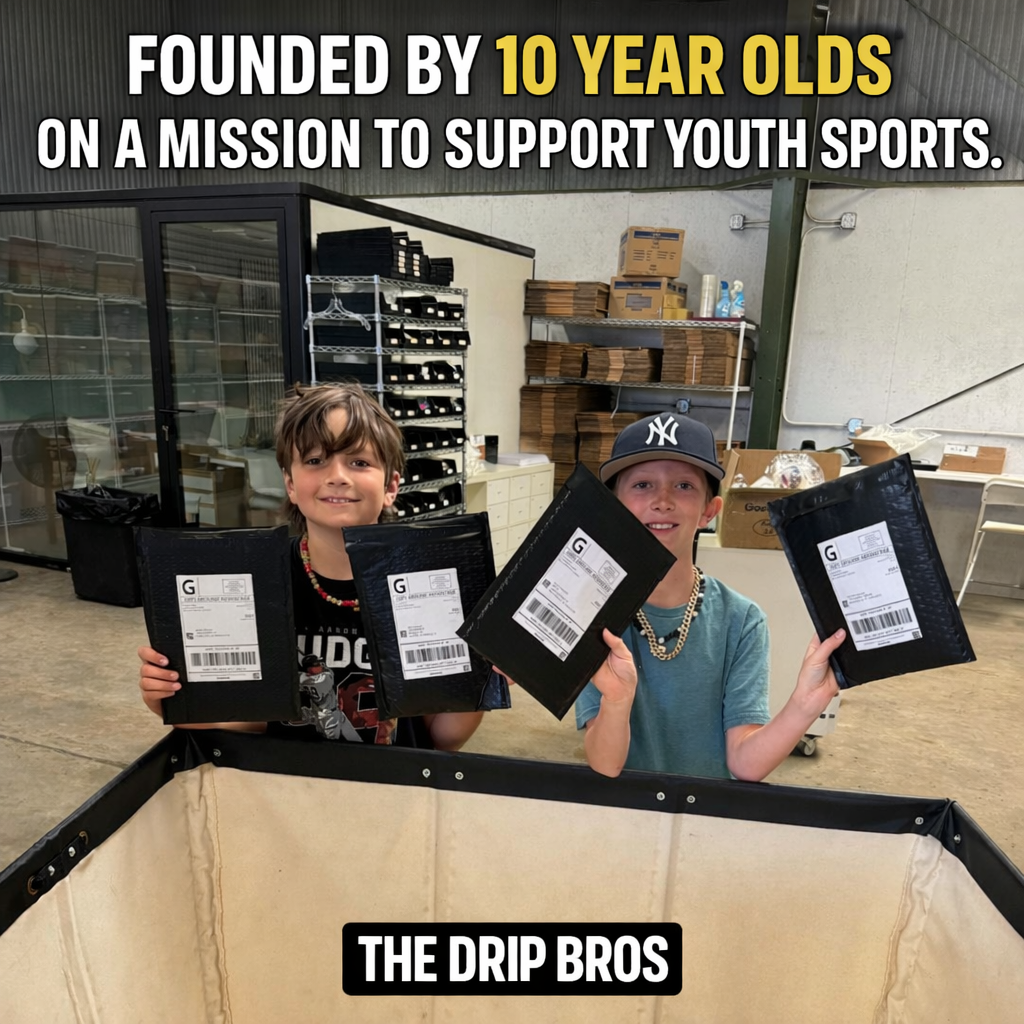
The Drip Bros began as a fourth-grade school project between best friends and is run by Jackson H and Jackson J, who are 11 years old. That origin is relevant when a team values a youth-founded sports brand, but it should still be evaluated alongside the practical details of the fundraiser itself.
Read reviews from coaches, parents, and athletic programs
Reviews are most useful when they mention specific parts of the experience. Look for comments about communication, product quality, delivery, checkout, and whether the final earnings matched the original explanation. A vague five-star rating is nice; a detailed review from a coach is much more helpful.
Read newer and older feedback, and watch for repeated patterns. One unhappy review may be a one-off, but several people mentioning late updates or confusing fees deserve a follow-up question. You can also ask a company for references from teams willing to discuss their experience.
Ask for proof of results instead of highlight-reel hype
Ask what “raised” means in the company’s examples. Is it total revenue, gross profit, or the amount left after every fee and cost? A case study can be encouraging without being a promise for your team, since roster size, supporter networks, pricing, and effort all change the outcome.
For a wider view, a guide to sports fundraising apps can help you identify common features such as campaign tracking and mobile sharing. Use outside material to build questions, then ask each company for numbers and terms that apply to your exact campaign.
Confirm the company understands youth sports logistics
Youth sports fundraising has a special kind of timing. Players miss messages, parents work different schedules, uniforms need to arrive before opening day, and somebody always discovers an incorrect jersey size after the order closes. A partner should be ready to explain how it handles those ordinary problems.
Ask who coordinates with the team, what information families receive, and how changes are communicated. The Drip Bros’ focus on sports-themed necklaces for athletes, teams, and fans fits the team-spirit side of this conversation, but every partner should still explain its ordering and support process in plain English.
Compare the fundraising model and earning potential
“Profit” can mean several different things, so do not compare campaigns using the biggest number on a flyer. Find out what supporters buy, what the team receives, and which costs come out before money reaches the team account. This is the part where a calculator earns its jersey.
Compare the model with your team’s habits. A product fundraiser may create excitement around something tangible, while a donation campaign may be easier for supporters who do not want another item at home. Neither is automatically better; the cleanest fit usually wins.
Understand how your team actually makes money
Ask whether earnings come from a percentage of sales, a fixed amount per item, donations, sponsorships, or a combination. Then ask when that amount is calculated and whether discounts change it. Put the answer in a simple example using one $20 sale so every parent hears the same math.
For example, if a product sells for $20 and the team keeps $8 after listed costs, that $8 is the useful number for planning. If the company only talks about the $20 sale, you still do not know whether the campaign can cover your goal. Clear math beats motivational confetti.
Review product sales, donations, and online campaign options
Product sales can give supporters a physical way to show team pride, while donations allow people to contribute without choosing an item. Online sharing can make either model easier to reach beyond the families sitting in the bleachers. Ask whether the campaign can support the mix your community is most likely to use.
The necklace fundraiser comparison is a useful place to think through traditional sales versus a team-spirit product. The Drip Bros offers sports-themed necklaces for athletes, teams, and fans, so that kind of product can connect the fundraiser with something players may genuinely enjoy wearing on and off the field.
Watch for minimum orders, quotas, and hidden fees
Read the pricing page and the agreement before players start sharing. Check for minimum quantities, setup fees, shipping charges, payment processing, taxes, required sales levels, and costs for unsold or damaged inventory. If a fee is hard to find, ask for the full cost in writing.
A quick review should answer these questions:
- Does the team pay anything before the campaign begins?
- Are supporters charged shipping separately?
- Is there a minimum order or sales quota?
- What happens if the campaign misses its target?
Once those answers are visible, the fundraiser is much easier to explain to families. No one likes discovering a surprise fee after the campaign has already gone full speed.
Calculate the net profit per player
Divide the expected net earnings by the number of participating players, then compare that figure with the effort required. This does not mean every player must raise the same amount. It simply shows whether the campaign’s workload makes sense for the team as a whole.
Also consider the value of the time saved. A campaign with a slightly lower margin may still be a better choice if it avoids collecting cash, sorting orders, or storing boxes in someone’s garage. The winning spreadsheet is the one nobody has to cry over.
Evaluate the technology and supporter experience
Technology should make the fundraiser feel lighter, not like a second job. Families should be able to understand the campaign quickly, open it on a phone, and complete a purchase or donation without hunting for the right button. The team side needs to be just as clear.
Try the experience as if you were a grandparent receiving the link or a player sharing it between school and practice. If the path is confusing for one person, it will probably confuse several more. Small friction adds up fast when a whole roster is involved.
Look for simple team and player setup
Ask how the organizer creates the team page, adds players, sets the goal, and assigns roles. Find out whether players need individual accounts and what information is visible to supporters. Setup should be explainable in a few steps without requiring a technology timeout.
Request a demo or walk-through before committing. A good setup process makes it obvious who can edit the campaign and who can only share it. That distinction protects the team from accidental changes while keeping participation manageable.
Make donating or buying easy on any phone
Most supporters will open the campaign from a text message, social post, or email. Test the page on a phone and check how quickly the goal, story, product details, price, and checkout appear. Tiny buttons, slow pages, and surprise account requirements can turn a willing supporter into someone who says, “I’ll do it later,” which is fundraising code for maybe never.
Ask whether supporters can pay using familiar options and receive a clear confirmation. The checkout should also show shipping and other charges before payment. Simple does not mean bare-bones; it means the important information is easy to see.
Check whether the platform supports sharing and reminders
A campaign needs a practical way for players and parents to share it. Look for copy-and-paste messages, social sharing, email or text tools, and reminders that do not feel like spam. Supporters may care about the team but still need a friendly nudge before the deadline.
Set a small communication plan with two or three updates: launch, halfway point, and final reminder. Keep each message short and specific about the goal. If your team wants spirit gear alongside the campaign, it can also shop team gear and give supporters a clear visual connection to the players.
Confirm the dashboard makes tracking painless
The organizer should be able to see progress, orders, payments, and player participation without rebuilding the numbers in a separate spreadsheet. Ask whether reports can be downloaded and whether the dashboard distinguishes gross sales from net earnings. A colorful progress bar is fun, but accurate records are the real MVP.
Have two adults review the tracking process before launch. One person can manage the campaign while another checks totals and deadlines. That simple backup makes mistakes easier to catch and keeps the team’s financial story clear.
Investigate communication, fulfillment, and customer support
A fundraiser is not finished when someone clicks “launch.” Questions arrive, orders change, products need to move, and families want to know what happens next. Before signing up, learn how the company communicates with organizers and supporters throughout that process.
The best answers are specific: who responds, through which channel, during what hours, and within what expected timeframe. If the company cannot explain support before the sale, it probably will not feel more organized after the sale begins.
Find out who handles questions when things go sideways
Ask whether your team gets a named contact, a general help desk, or a self-service knowledge base. Find out what the organizer handles and what the company handles. You want a clear path for payment questions, order questions, account problems, and urgent issues near the deadline.
Give the support process a small test before committing. Send one practical question and notice whether the answer is friendly, complete, and easy to follow. That first interaction tells you more than a heroic “we’re always here” slogan.
Check delivery timelines and order accuracy
Ask when orders are submitted, when they are produced or packed, and when supporters can expect delivery. If the fundraiser is tied to opening day or a tournament, build in extra time instead of betting the season on perfect logistics. Confirm whether orders ship together or go directly to individual supporters.
Clarify how the company checks sizes, colors, quantities, and addresses. One wrong item may be fixable, but a whole team order arriving late is a much bigger headache. Written timelines help parents know whether a gift is likely to arrive before the big game.
Review policies for refunds, substitutions, and damaged products
Read the policy before a problem occurs. Ask what happens if an item arrives damaged, a supporter changes their mind, a product sells out, or a delivery address is incorrect. Also find out whether refunds reduce the team’s earnings and who communicates the resolution.
Keep the policy somewhere the team can access it. Parents should not have to search through old messages while a supporter waits on the phone. Clear expectations make small problems feel manageable instead of turning them into dugout drama.
Make sure payments and earnings arrive on schedule
Ask when supporter payments are processed and when the team receives its earnings. Confirm the payout method, required account information, reporting available to organizers, and whether there is a holding period. A fundraiser cannot pay for uniforms on time if the money arrives after the uniforms are needed.
Write the payout date into the team calendar. Then assign one adult to reconcile the final report with the amount received. That last check closes the loop and gives families confidence that the campaign was handled carefully.
Protect your team with transparency and smart decision-making
The final choice should protect both the team’s money and its players’ information. Read the agreement, ask direct questions, and avoid rushing because a season deadline is getting close. A trustworthy partner should welcome reasonable questions instead of treating them like bad sportsmanship.
Use the same scorecard for every company you consider. Compare the actual terms, workload, support, and net earnings—not just the most exciting product photo or the largest example from another team. Good decisions are usually pretty boring, which is exactly what you want when money and kids are involved.
Review contracts, privacy practices, and payment security
Check who owns the campaign content, what data is collected, how long it is kept, and who can access it. Review payment security information and confirm whether the company sells or shares participant or donor information. Parents deserve a plain-language explanation before they provide details about themselves or their children.
Also read the terms for cancellations, refunds, account access, and disputes. A basic site terms review is a reminder that agreements are not decorative website furniture. If a sentence is unclear, pause and ask for an explanation in writing.
Confirm the fundraiser follows youth-focused regulations
Ask how the company handles consent, age-appropriate participation, financial records, and school or nonprofit requirements. Local rules and school policies can differ, so the team should confirm what applies to its own organization. Never assume that a popular campaign automatically meets every district’s expectations.
Keep children out of sensitive payment and account tasks. Adults can supervise communication, review data settings, and make sure players are not pressured to share personal information publicly. Fundraising should build team confidence, not create a privacy problem.
Compare partners using the same scorecard
Create a simple scorecard with the categories that matter most to your team. Give each company the same questions and record the answers while they are fresh. A fundraising partner checklist can inspire the kind of ownership, cost, workflow, and exit questions that are easy to overlook.
Useful scorecard categories include:
- Net earnings per sale and per player
- Setup time and organizer workload
- Mobile checkout and sharing tools
- Fulfillment, refunds, and support
- Privacy, payment security, and payout timing
The scorecard turns a fuzzy debate into a fair comparison. If one partner wins only because of a flashy promise, the numbers will usually expose that pretty quickly.
Ask the final questions before signing your team up
Before you commit, ask what the company needs from the team, what the team can expect in return, and what happens if the campaign changes. Ask for a sample earnings statement, a campaign timeline, support contacts, and every required fee. If the answers shift from one conversation to the next, treat that as a warning.
Finish with a quick family check-in. Make sure the fundraiser is affordable for supporters, manageable for players, and connected to a goal everyone understands. When the plan feels clear enough to explain in the car ride to practice, you are probably close.
Ready to Rally the Team?
If your team wants a fun way to show its colors, explore The Drip Bros’ sports-themed necklaces and choose a team-spirit option that fits your players. Keep the goal clear, share the campaign with confidence, and make the fundraiser feel like part of the season—not another chore taped to the dugout wall.
Conclusion
Choosing a youth sports fundraiser company is mostly about fit: fit with your budget, your calendar, your families, and your team’s energy. Check the math, test the supporter experience, ask about fulfillment, and protect player information before you sign up. The right partner makes the work easier while keeping the focus where it belongs—on the kids, the sport, and a season worth remembering.
Frequently Asked Questions
What should a youth sports fundraiser company provide?
It should clearly explain the fundraising model, costs, expected earnings, setup process, support, fulfillment, payout timing, and data practices. The team should know exactly what it is responsible for before the campaign starts.
How much should a youth sports team try to raise?
Set the target from real expenses such as registration, uniforms, travel, equipment, and field costs. Add known fees and leave a reasonable cushion, but avoid choosing a number that the team cannot explain or realistically pursue.
Are product fundraisers better than donation campaigns?
Neither is automatically better. Product fundraisers give supporters something tangible, while donation campaigns can be simpler for people who prefer to contribute directly. Compare expected net earnings, effort, audience, and timing.
How can teams calculate their real profit?
Subtract product costs, shipping charges, platform fees, payment processing, and other required expenses from total revenue. Then divide the remaining amount by the number of participating players to understand the likely value per player.
What technology features matter most for team fundraisers?
Look for easy team setup, mobile-friendly checkout, simple sharing, reminders, accurate tracking, downloadable reports, and clear access controls. The best tools reduce manual work instead of creating another spreadsheet project.
What questions should teams ask about fulfillment?
Ask about production and delivery timelines, order accuracy, shipping methods, substitutions, damaged items, refunds, and who handles supporter questions. Get the answers in writing if the fundraiser has a firm tournament or season deadline.
How can a team protect children’s privacy during fundraising?
Limit public information about players, use adult-managed accounts and payments, review the company’s privacy policy, and confirm how participant and donor data is stored or shared. Follow school, league, and local requirements as well.