
How to Size a Beaded Necklace for a Kid
Start with the kid, not the necklace
The best necklace length starts with the person wearing it, not a random number on a chart. Kids grow at different speeds, and an 11-year-old athlete may have a very different build from another 11-year-old. Before picking beads or team colors, think about comfort, movement, and how the necklace will actually be used. That is the real starting lineup.
Measure the neck like a pro scout
Have the child stand normally and place a soft tape around the base of the neck, without pulling it tight. Keep the tape level and note the measurement where the ends meet. The goal is to learn the child’s neck size, then choose a finished necklace length that gives a little space for movement.
A quick measurement beats guessing from a birthday. If you are comparing options, this kids necklace size guide can give you another reference point, but the child’s actual measurement should call the play.
Consider age, height, and build
Age ranges can offer a rough starting point, but they are not a guarantee. Height, shoulder width, and neck size all affect where a necklace falls. A smaller kid may prefer a shorter, lighter style, while a taller child may be more comfortable with a little extra length.
For a youth sports necklace, fit matters more than trying to make every player wear the exact same size. The goal is a comfortable look that stays out of the way during normal wear.
Ask how the necklace will be worn
A necklace worn over a T-shirt may need a different length from one worn close to the neck. Ask whether the child wants a snug choker-style look, a relaxed fit, or something that sits near the collarbone. Also ask whether it is for a birthday outfit, everyday wear, or a team event.
Style can affect the answer, too. If the necklace is part of a larger outfit, a guide to pool party outfits may spark ideas about how accessories sit with different clothes, even if the game-day uniform is the main event.
Leave room for comfort and movement
A necklace should not press into the neck when the child turns, bends, or laughs at a teammate’s terrible joke. Leave enough room for comfortable breathing and ordinary movement, but avoid making it so long that it swings or catches easily. Comfort comes before swagger every time.
Have the child say how it feels instead of judging only by sight. If they keep tugging at it, the fit probably needs another look.
How to size a kids necklace with simple measurements
You do not need fancy equipment to figure out how to size a kids necklace. A soft tape, a piece of string, or a necklace that already fits can all help. Take the measurement in the position where the necklace is meant to sit, rather than measuring flat across the front of the neck. Small details here can save you from a very un-fun return.
Use a soft measuring tape
Wrap a flexible tape around the neck at the intended resting point. Keep one finger between the tape and the skin so the measurement is not overly tight, then record the number. Measure twice if the first result seems surprising; tape measures can get a little chaotic when someone is bouncing around like they just hit a walk-off single.
The measurement is the baseline, not automatically the final necklace length. Add a modest comfort allowance based on the style and how close the child wants it to sit.
Try the string-and-ruler method
If there is no tape handy, use a piece of non-stretchy string or yarn. Wrap it around the neck or along the preferred necklace path, mark where it meets, and lay it flat beside a ruler. This method is simple and works well when a child is helping choose the fit.
For a cleaner result, make sure the string follows the same path the necklace will take. Then compare that number with a children’s size chart rather than treating the string length as a finished order by itself.
Measure an existing necklace that fits
A necklace the child already enjoys can be a useful model. Lay it flat and measure from end to end, including the clasp but not stretching the cord. Notice where it falls on the body, since two necklaces with the same length can look different if their beads or clasp designs are different.
Ask what the child likes about that necklace. “It does not bother me” is valuable data, even if it is delivered with the dramatic confidence of a sports commentator.
Add a little breathing room without going overboard
Once you have the neck measurement, add a small amount of ease for comfort. The exact allowance depends on the child, the intended fit, and the necklace construction. A snug style needs less extra length than a relaxed style, while a bulky clasp or large beads may change how it sits.
Use a paper or string mock-up before ordering if you are unsure. Let the child try it while wearing the type of shirt they will usually wear, then adjust before committing.
Pick the right necklace length
There is no single magic number that fits every kid. Common length ranges can help narrow the field, but personal measurements and the necklace’s construction still matter. Think of age charts as a warm-up drill: useful, not the whole game plan.
Match common lengths to age ranges
Broad guides often place younger children in shorter ranges and older kids in longer ones, but the ranges overlap. For many children, a rough starting point might be around 12–14 inches for younger kids and 14–18 inches for older children, with plenty of individual variation. Always check the child’s measurement before choosing.
A children’s necklace length guide can help you compare age-based suggestions with safety and comfort considerations. Treat those suggestions as a starting lineup, not a final ruling from the referee.
Choose a choker fit versus a relaxed fit
A choker-style necklace sits closer to the neck and usually needs a more precise measurement. A relaxed fit falls lower and may feel better over a shirt, but too much extra length can create snagging or swinging. Let the child’s preference have a vote, especially if they will be wearing it for several hours.
Try both looks with string first. That little test makes the difference between “this is awesome” and “why is this attacking my collar?” pretty obvious.
Account for beads, knots, and the clasp
The advertised length may describe the full necklace, but beads, knots, and the clasp all affect how it hangs. Large beads can make a necklace feel shorter across the front, while a thick clasp may add bulk at the back. Stretchy cord can also behave differently from a fixed-length design.
If you are choosing a sports style, check the listed construction and size rather than relying only on a visual guess. For example, the Sky Drip Kids Sports Necklace is documented in youth 18-inch and adult 22-inch sizes, so those stated options are more useful than guessing from a photo.
Use a size chart as a starting lineup
A chart is helpful when you need a quick comparison, especially for a gift. Still, it should be paired with a real measurement and a look at the child’s build. If the child sits between suggested ranges, comfort and intended wear should break the tie.
Write down the neck measurement, preferred fit, and usual shirt type before shopping. That tiny scouting report makes the choice much less random.
Check the fit before calling game over
The necklace can look perfect in a product photo and still feel wrong once the child starts moving. Test it in normal positions, with the kind of clothing they will actually wear. A comfortable fit should stay put without demanding constant adjustments.
Test the necklace while sitting and standing
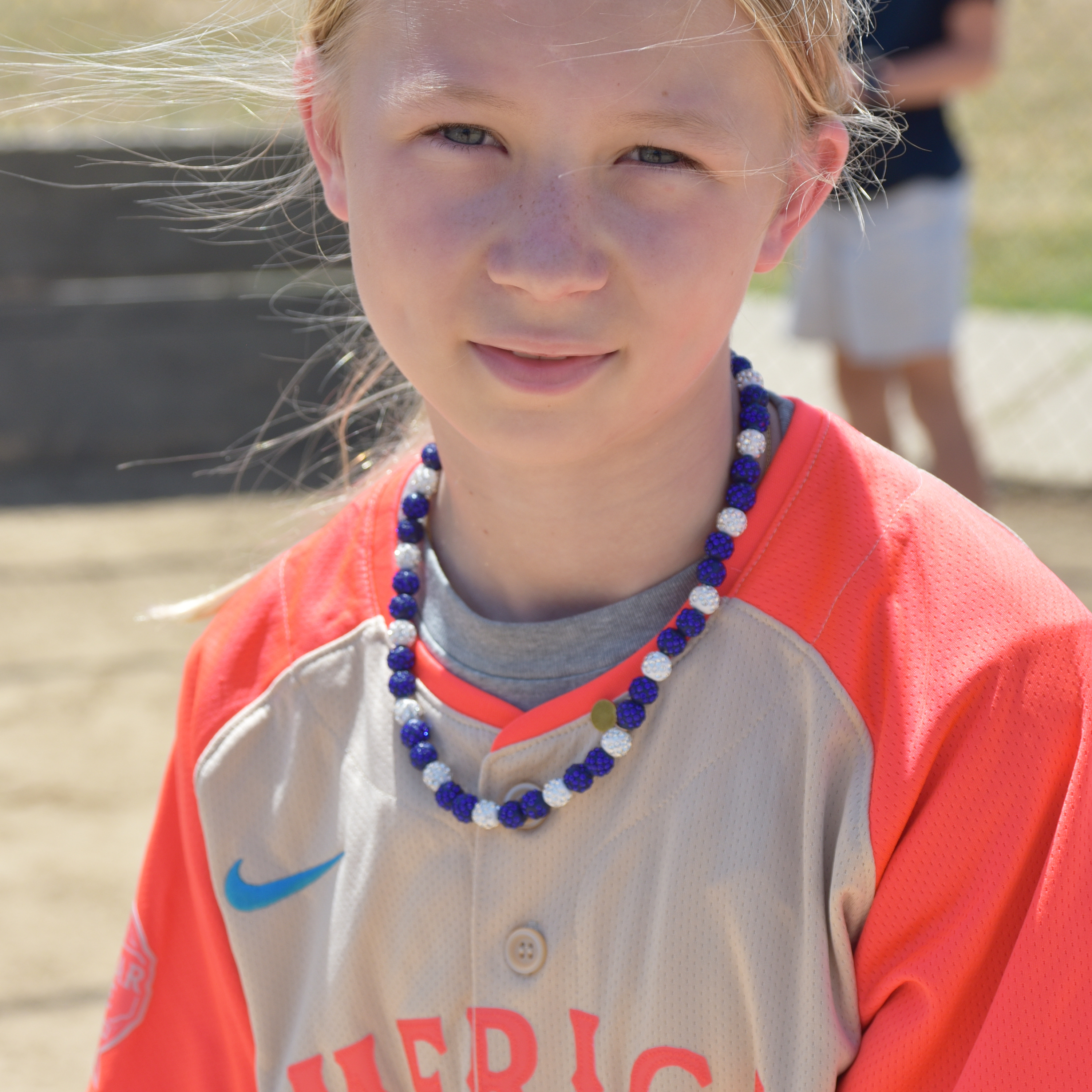
Have the child try it while standing, sitting, and looking down. Watch where the beads land and whether the clasp shifts into an uncomfortable spot. A necklace that fits only while standing still is not ready for the trophy ceremony.
Check the fit over a shirt if that is how it will usually be worn. Fabric can change the resting position by more than you might expect.
Make sure the child can move freely
Ask the child to turn their head, reach forward, raise both arms, and walk around. The necklace should not pull at the neck or swing heavily with every movement. For a young athlete, remove it before sports or active play even if it feels comfortable during a test.
The Anchor Faith Drip Beaded Sports Necklace is described as lightweight and comfortable for young athletes, but any necklace still needs to be checked on the individual child. A product description cannot replace a real-life fit test.
Look for pinching, sliding, or snagging
Pinching is a sign that the necklace is too tight, while constant sliding or swinging may mean it is too loose or heavy for the child. Look for beads catching on collars, hair, backpack straps, or jacket zippers. Ask the child what they notice, because kids usually provide a very honest review at maximum volume.
If anything feels irritating after a few minutes, pause and adjust the length or choose a different construction. Tiny annoyances become major annoyances by hour three.
Recheck the fit as the child grows
Kids do not stay the same size for long, especially during busy school and sports seasons. Recheck the fit every few months or whenever the child says it feels different. Growth, new clothing layers, and changing preferences can all affect where the necklace sits.
Keep the original measurement with the necklace so you can compare later. A simple note in a phone is enough; no scouting clipboard required.
Choose kid-friendly beads and necklace details
Length is only one part of a good choice. Bead size, weight, cord, and clasp all affect how comfortable and manageable the necklace feels. For kids, the best details are the ones that look fun without becoming a distraction or a hazard.
Pick lightweight beads for smaller kids
Smaller children may find heavy beads tiring, especially if the necklace is worn for a long stretch. Lightweight materials can make it easier to move naturally and reduce the urge to pull at the necklace. Consider the total weight, not just the size of one bead.
A necklace can still have bold team colors without feeling like a dumbbell around the neck. The right balance keeps the style fun and the kid focused on the day.
Select a secure, easy-to-use clasp
The clasp should stay closed during ordinary wear and be simple for an adult to inspect. Younger kids may need help putting the necklace on and taking it off, so avoid a closure that creates frustration. A secure fit is useful, but it should never encourage a child to yank or twist the necklace.
Practice with the clasp before the first big event. If the child cannot manage it safely, make sure an adult is nearby.
Avoid sharp edges and oversized beads
Run your fingers over the beads and accents to check for rough or sharp areas. Oversized pieces can add weight, catch on clothing, or become uncomfortable when the child leans against a chair. Smooth, appropriately sized details are usually the better play.
Also consider dangling charms and small detachable pieces. The younger the child, the more carefully those details should be supervised.
Decide whether stretchy cord is a good match
Stretchy cord can make a necklace easy to pull over the head, but it may not suit every child or activity. Check whether the cord feels secure, whether the beads move too much, and whether the child might stretch it repeatedly. A fixed closure may be a better fit for some routines.
Whatever construction you choose, inspect it before wearing. The right cord is the one that matches the child’s age, habits, and supervised use.
Keep necklace safety in the playbook
A necklace is an accessory, not protective sports equipment. Safe use means choosing a reasonable fit, supervising younger children, and taking it off when the activity gets intense. These habits are easy to remember if you treat them like basic game-day rules.
Supervise younger children while wearing it
Younger children should wear necklaces only with close adult supervision. Watch for pulling, chewing, tangling, or attempts to share the necklace with a sibling in a way that would make any coach call timeout. If the child cannot leave it alone, remove it.
Older kids may manage more independently, but an adult should still help inspect the necklace and explain when it needs to come off.
Remove the necklace during sports and active play
Take necklaces off for sports, climbing, running games, and other active play. They can catch on equipment, clothing, or another player, even when they seem light and secure. Team spirit does not require wearing an accessory during the actual play.
The Rivalry Drip Purple, Black & White Kids Sports Necklace is described for game days, practice, or everyday wear, but those are occasions around the activity—not a reason to keep jewelry on during rough movement.
Avoid sleeping, swimming, and roughhousing in it
Remove the necklace before bed, swimming, bathing, and roughhousing. Water, twisting, and contact can put extra stress on the cord and clasp. Taking it off also gives the skin a break and makes it easier to notice damage.
If the activity is hard on a T-shirt, it is probably hard on a necklace too.
That rule is simple enough for an 11-year-old to remember. Store the necklace in a small pouch or a safe spot so it is ready for the next low-key wear.
Inspect the cord, knots, and clasp regularly
Look over the cord, knots, beads, and clasp before wearing the necklace. Stop using it if you see fraying, loose knots, cracked beads, or a clasp that no longer closes properly. Repairs should be handled by an adult or a qualified jewelry professional rather than improvised during the car ride to a tournament.
A quick check takes less time than finding a loose bead on the floor. Make it part of the routine, especially after frequent wear.
Find Your Game-Day Drip
When the fit is measured and the safety rules are clear, browse team necklace styles for a kid-friendly way to show team pride. Pick the colors, check the size, and keep the necklace off during active play.
Conclusion
The winning formula is simple: measure the child, choose a comfortable length, test movement, and inspect the necklace often. Age charts can guide you, but the child’s fit and habits make the final call. With a little planning, a beaded necklace can bring plenty of team spirit without becoming a benchwarmer in the comfort department.
Frequently Asked Questions
What is the best necklace length for a child?
The best length depends on the child’s neck measurement, build, preferred fit, and how the necklace will be worn. Common age ranges can help, but a real measurement is more reliable.
How do I measure a child’s neck for a necklace?
Use a soft measuring tape around the neck at the desired resting point without pulling it tight. You can also use non-stretchy string, mark the meeting point, and measure the string with a ruler.
Should a child’s necklace be tight or loose?
It should be comfortable rather than tight or excessively loose. Leave enough room for normal movement, while avoiding extra length that could swing, snag, or catch.
Can I measure a necklace that already fits?
Yes. Lay the existing necklace flat and measure its full length, including the clasp. Also note where it sits on the child and whether the child finds it comfortable.
Are longer necklaces safe for kids?
A necklace that is too long may catch or snag more easily. Choose a length that fits comfortably, supervise younger children, and remove the necklace for sports, swimming, sleeping, and rough play.
Can kids wear necklaces during sports?
Necklaces should be removed during sports and active play because they can catch on equipment, clothing, or another player. They are better suited to game-day arrival, team events, or everyday wear away from active movement.
How often should a child’s necklace be checked?
Inspect the cord, knots, beads, and clasp before regular wear and after heavy use. Recheck the fit every few months or whenever the child grows or says the necklace feels different.